Greetings

 The Asia-Pacific Society of Harm Reduction and Addiction (ASHRA) was founded in November 2025 with the aim of researching and promoting harm reduction interventions for addiction in the Asia-Pacific region. Harm reduction is a public health philosophy whose intent is to help people stay alive by preventing infections, overdoses, and other negative consequences of substance use and behavior addiction. On the surface, harm reduction is a set of evidence-based interventions. In reality, it is more. It is about creating spaces where people can find community and connection and identify the positive changes they want to make to improve their own lives (Dasgupta N, 2022). However, it is also true that the acceptance of substance use and behavior addiction has sparked debate around the world. Additionally, harm reduction is influenced by the state of abuse and addiction, cultural and religious beliefs and values, and the nature of the judicial and administrative systems in each country and region. Therefore, there is no single universally applicable definition of harm reduction. Until now, attention has tended to be focused on Europe and the United States, but in the countries and regions of the Asia-Pacific region, initiatives of harm reduction are also being taken that are tailored to the specific circumstances and cultures of each area. This academic conference, will focus specifically on harm reduction in the Asia-Pacific region, is the first congress of its kind in this region. I sincerely hope that we can engage in discussions with our Asian neighbors and gain new knowledge about how harm reduction should be tailored to Asian needs.

 October is the best season for sightseeing in Hokkaido, as you can enjoy beautiful autumn leaves and savor delicious seasonal foods. I am very much looking forward to meeting you all in Sapporo.

2026 Congress Chair Hisatsugu Miyata
ASHRA President Prof. Tony Szu-Hsien Lee

General Information

1. Name of Congress
The 1st Congress of Asia-Pacific Society of Harm Reduction and Addiction
2. Congress Theme
Harm Reduction in the Asia-Pacific Rim
3. Date
October 9-11, 2026
4. Venue
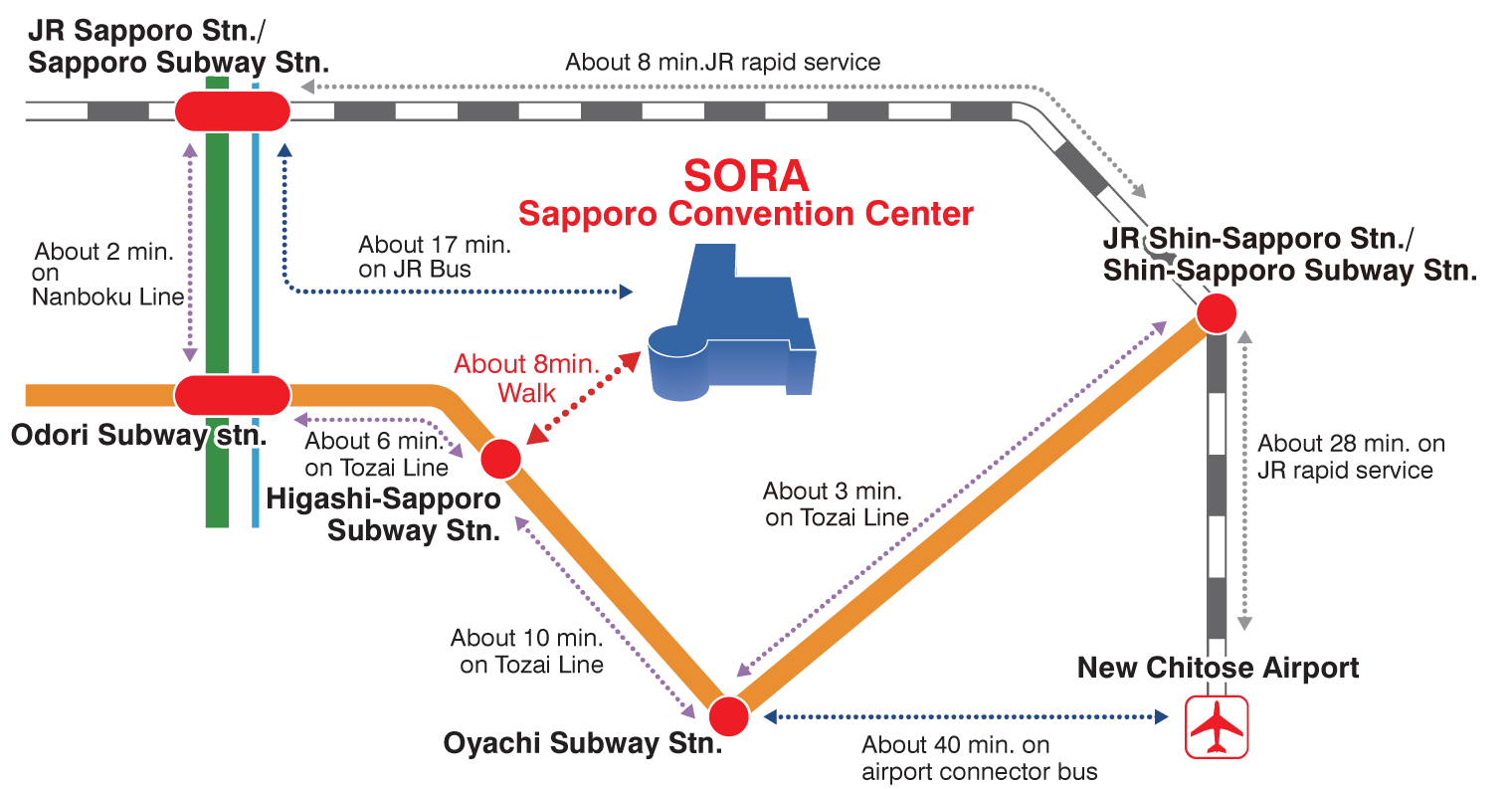
Sapporo Convention Center
1-1-1 Higashi-Sapporo 6-jo, Shiroishi-ku, Sapporo, 003-0006, Japan
5. Secretary

1) The program committee
E-mail: ashra2026meeting@gmail.com
Submission address for symposium, workshop, and oral/poster presentation.

2) Congress secretariat
Convention Linkage, Inc.
E-mail: alcohol2026@c-linkage.co.jp
Contact information for general inquiries regarding the congress including registration and the congress schedule, etc.

Administrative Members

1. Officers
  • PresidentTony Szu-Hsien Lee
    National Taiwan Normal University (Taiwan)
  • Vice-PresidentHisatsugu Miyata
    Jikei University School of Medicine (Japan)
  • Senior AdvisorToshikazu Saito
    Sapporo Medical University (Japan)
  • SecretaryTomohiro Shirasaka
    Kotoni shirasaka mental clinic (Japan)
  • Chia-chun Hung
    National Taiwan Normal University (Taiwan)
  • TreasurerNaoyuki Hironaka
    Tokyo Metropolitan Institute of Medical Science (Japan)
  • Assistant Secretary
  • Nirmin Juber
    National Taiwan Normal University (Taiwan & Indonesia)
2. Directors
  • Vicknasingam Balasingam KasinatherUniversity Sains Malaysia (Malaysia)
  • Le Minh GiangHanoi Medical University (Vietnam)
  • Mariano S HembraPhilippine Addiction Specialists Society (Philippines)
  • Kristiana SisteFaculty of Medicine, Universitas (Indonesia)
  • Woraphat Ratta-aphaMahidol University (Thailand)
  • Koji TakadaTeikyo University (Japan)

Call for Symposium, Workshop and
Oral/Poster presentation

Sessions Deadline for Proposals
Symposium and Workshop
Oral/Poster Presentation

*The symposium and workshop submission system consists of two steps: Step 1 and Step 2.

*Step 1 is for determining acceptance or rejection of the proposal, while Step 2 is for submitting the complete form for the symposium or workshop after the proposal has been accepted.

*Please note that the submission form and deadline are different for Step 1 and Step 2.

Submission Guidelines

  • Symposium, Workshop, and Oral/Poster submissions must be made by using each submission form and emailed to “ashra2026meeting@gmail.com”.
  • Abstract Acceptance Notification is e-mailed to each applicant by August 31, 2026.
1) Symposium submission guidelines
  • Symposium is one and a half hour.
  • A chair and co-chair are required.
  • The organizer can have four to five speakers and one to two discussants (if necessary) and decide each presentation duration considering total time slot.
  • The organizer submits the overall session title (maximum 20 words, including subtitle) and a summary abstract for the overall session (maximum 100 words).
  • Speakers are required to submit their individual titles (maximum 20 words, including subtitle) and abstracts (maximum 300 words). Abstracts include background/aims, methods, results, conclusions/implications.
2) Workshop submission guidelines
  • Workshop is one hour.
  • A chair and co-chair are required.
  • The organizer can have two to four speakers and decide each presentation duration considering total time slot.
  • The organizer submits the overall session title (maximum 20 words, including subtitle) and a summary abstract for the overall session (maximum 100 words).
  • Speakers are required to submit their individual titles (maximum 20 words, including subtitle), and abstracts (maximum 300 words).
  • Abstracts include background/aims, methods, results, conclusions/implications. Tables and figures are not permitted.
  • Workshops should focus on skills-building and problem-solving opportunities related to harm reduction or addiction research and treatment and are expected to be more interactive than formal symposia.
3) Oral/Poster Presentations submission guidelines

# Presentation Format

  1. The presenting author can choose his or her preferred format: Oral or Poster / Oral only / Poster only.
  2. The program committee will consider author’s preference, but final decisions may be adjusted based on the number of submissions. Presentation duration may vary depending on the total number of abstracts.

# The presenting author should choose the category and theme.

  1. Substance use harm reduction strategies
  2. Behavioral addiction harm reduction
  3. Policy, law, and public health perspectives
  4. Clinical and community-based interventions
  5. Cross-cultural and Asia-Pacific comparative studies
  6. Emerging substances and vulnerable populations
  7. Education, prevention, and capacity building
  8. Innovative practices and program evaluations
  9. Others

# Required Information

  1. The presenting authors are required to submit their titles (maximum 20 words, including subtitle) and abstracts (maximum 300 words). Abstracts include background/aims, methods, results, conclusions/implications.
  2. Abstracts include background/aims, methods, results, conclusions/implications. Tables and figures are not permitted.
4) Disclosures of Conflict of Interest (COI) and Recipient of Appropriate Ethical Approval
  1. The presenting authors should ensure that their studies have received appropriate ethical approval.
  2. The authors must disclose any potential COI at the time of abstract submission. Additionally, the presenting authors must include COI disclosures in their presentation materials.
5) Confirmation and Modification of Submitted Abstracts
  1. After submission, a confirmation email with your abstract submission number will be sent to your registered email address.

Registration

TBA

The charm of Hokkaido

Hokkaido, located in the northernmost part of Japan, is a popular tourist destination boasting magnificent nature, fresh seafood and agricultural products, and breathtaking scenery throughout the seasons. Having ranked first in Japan's attractiveness rankings for 17 consecutive years, it offers a diverse range of attractions: the urban charm of Sapporo, Shiretoko World Natural Heritage site, the lavender fields of Furano, and the night views of Hakodate.